Japan's Golden Week Explained: Holidays, Dates and Length
Golden Week is not one holiday but four, close together at the turn of April and May. How long it lasts depends on the weekdays they fall on each year.
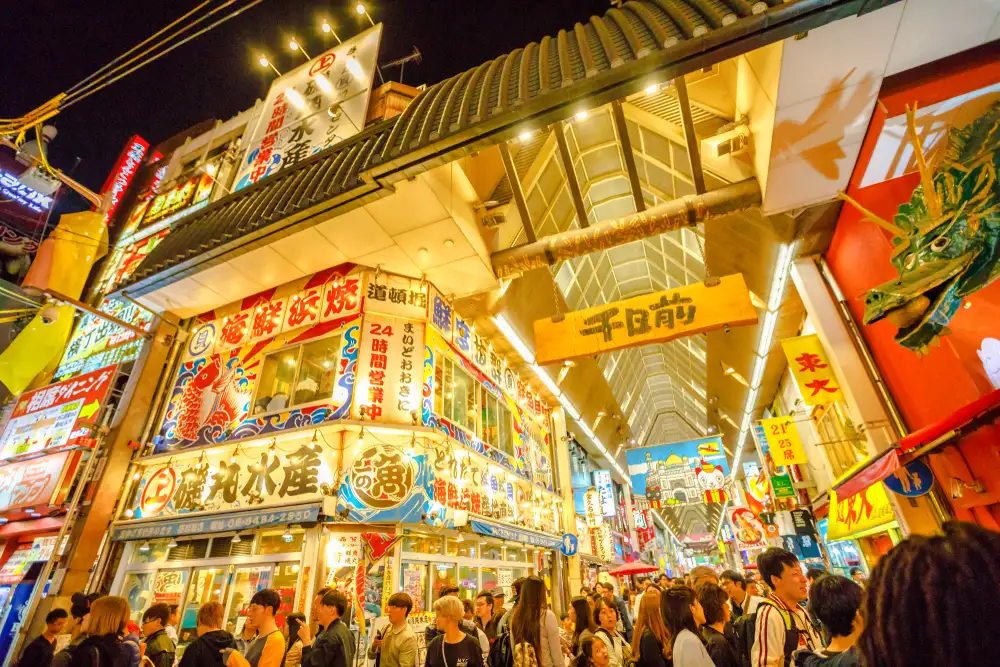
If you work with colleagues, suppliers or customers in Japan, the end of April and the start of May need special attention. Offices close, replies slow down, and travel inside Japan becomes very busy. That period is Golden Week, a cluster of national holidays that, depending on the year, adds up to anything from a few scattered days to a long continuous break.
The holidays that make up Golden Week
Golden Week is not a holiday in its own right. It is the name for four national holidays that fall within about a week:
| Date | Holiday | Notes |
|---|---|---|
| 29 April | Showa Day | Birthday of the Showa Emperor; given this name in 2007 |
| 3 May | Constitution Memorial Day | Marks the post-war constitution coming into effect |
| 4 May | Greenery Day | Moved to 4 May in 2007 |
| 5 May | Children's Day |
Because 3, 4 and 5 May are consecutive holidays, the core of Golden Week is always at least three days in a row. Showa Day sits a few days earlier, and whether it joins up with the rest depends on the weekdays.
The rules that change the length
Two features of Japan's holiday law shape Golden Week:
- Substitute holidays. When a national holiday falls on a Sunday, the next weekday that is not already a holiday becomes a substitute holiday. A holiday that falls on a Saturday is not replaced.
- Days between holidays. A day sandwiched between two national holidays becomes a holiday as well. Before 4 May became Greenery Day, this rule was what made 4 May a day off.
Combined with the weekend, these rules mean the continuous break around 3 to 5 May can be three, four or five days long, and in some years the gap to Showa Day is only one or two working days.
Worked example: Golden Week 2026 to 2028
Here is how the four holidays fall in three consecutive years, for a Monday-to-Friday worker.
2026
Showa Day is Wednesday 29 April. Constitution Memorial Day, 3 May, is a Sunday, so a substitute holiday is needed. 4 and 5 May (Monday and Tuesday) are already holidays, so the substitute falls on the next free weekday, Wednesday 6 May. The continuous break is Saturday 2 May to Wednesday 6 May: 5 days. Showa Day stands alone midweek. Taking Thursday 30 April and Friday 1 May as leave would join everything up into Wednesday 29 April to Wednesday 6 May: 8 days for 2 days of leave.
2027
Showa Day is Thursday 29 April. 3, 4 and 5 May fall on Monday, Tuesday and Wednesday. The continuous break is Saturday 1 May to Wednesday 5 May: 5 days. Friday 30 April is a natural bridge day: take it and the break runs from Thursday 29 April to Wednesday 5 May, 7 days for 1 day of leave. Take Thursday 6 and Friday 7 May as well and it runs to Sunday 9 May: 11 days for 3 days of leave.
2028
Showa Day falls on Saturday 29 April, and because Saturday holidays are not replaced, it gives no extra weekday off. 3, 4 and 5 May are Wednesday, Thursday and Friday, joining the weekend of 6 and 7 May. The continuous break is Wednesday 3 May to Sunday 7 May: 5 days. Taking Monday 1 and Tuesday 2 May would give Saturday 29 April to Sunday 7 May: 9 days for 2 days of leave.
| Year | Continuous break without leave | Best short extension | Leave days | Total days off |
|---|---|---|---|---|
| 2026 | Sat 2 May to Wed 6 May | Wed 29 Apr to Wed 6 May | 2 | 8 |
| 2027 | Sat 1 May to Wed 5 May | Thu 29 Apr to Wed 5 May | 1 | 7 |
| 2028 | Wed 3 May to Sun 7 May | Sat 29 Apr to Sun 7 May | 2 | 9 |
The continuous break happens to be five days in each of these three years, but the working days around it change, which changes how easy it is to extend. You can check the exact count for any range with the business days calculator set to Japan.
A one-off example: 2019
Golden Week can be extended by special decisions. In 2019, the enthronement of the new emperor on 1 May was made a one-off national holiday. Under the rule that a day between two holidays also becomes a holiday, 30 April and 2 May became days off too, producing a continuous break of ten days from 27 April to 6 May. It shows that the calendar for a given year should always be confirmed against the official list.
What closes and what does not
Government offices and banks follow the national holidays. Many companies close for the national holidays, and some close for the whole period including the working days in between, but practice varies by employer and sector. Retail, hospitality and transport usually stay open and are often at their busiest. If you depend on a Japanese partner, ask directly which days they will be closed rather than assuming.
Other clusters in the Japanese calendar
Golden Week is the best-known cluster, but not the only one. In September, Respect for the Aged Day (the third Monday) and the Autumnal Equinox Day sometimes fall close enough to create a second multi-day break, occasionally called Silver Week. Equinox dates are set by official announcement based on astronomical calculation, so confirm them from the published list rather than assuming. The New Year period is also widely taken off, although only 1 January is a national holiday; many companies close for several days around it.
Working with Japan from abroad
- Expect slower responses from late April until the week after 5 May, even on working days in between.
- Avoid deadlines that fall on or just after the break; a deadline on 6 or 7 May may effectively mean the end of April for your Japanese counterparts.
- Remember that 1 May is not a national holiday in Japan, unlike in many other countries, so European and Japanese closures only partly overlap.
- Use the team overlap tool to see which days both sides are working.
Planning checklist
- Look up the year's Golden Week dates on the Japan public holidays calendar, including any substitute holiday.
- Count the working days between Showa Day and 3 May; they decide how long the break can be stretched.
- Confirm partner and supplier closures directly.
- Move deadlines and deliveries away from the period, and allow for slower replies on the working days in between.
- If travelling to Japan, plan for very busy transport and accommodation across the whole week, and see the 2027 long weekends in Japan for other peak dates.