Switzerland Public Holidays: Cantonal Calendars and 1 August Explained
Switzerland has exactly one public holiday set at federal level. Every other day off depends on the canton, and sometimes the municipality, where you work.
A company with offices in Zurich, Geneva and Lugano sends round a single list of Swiss public holidays. Within weeks it has to issue corrections: Lugano closes for St Joseph's Day in March, Zurich closes on 1 May, and Geneva has a holiday in September that nobody else has heard of. In Switzerland, the national level sets one holiday. The 26 cantons set the rest.
The single federal holiday
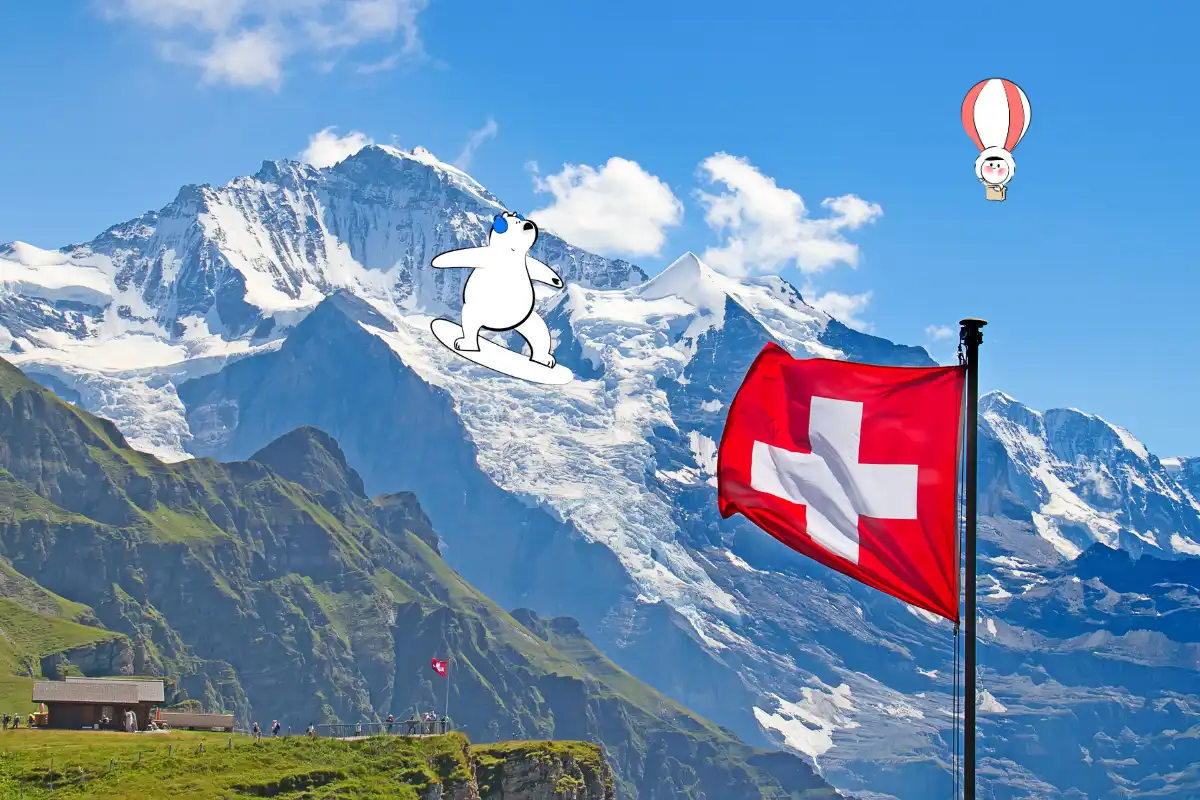
1 August, Swiss National Day, is the only public holiday set at federal level. It has been a public holiday nationwide since a popular vote in 1993, and the Federal Constitution states that it is treated like a Sunday under employment law and is paid. That is a stronger guarantee than for any other Swiss holiday.
What 1 August does not get is a substitute. When it falls on a weekend, nothing moves. In 2026, 1 August is a Saturday; in 2027 it is a Sunday. For Monday-to-Friday workers, that means two years in a row without a weekday off for National Day.
How cantonal holidays work
Under the federal Labour Act, cantons may designate up to eight further days a year that are treated like Sundays for employment purposes. Cantons choose which days, and some municipalities add local days of their own. Whether employees are paid for cantonal holidays is not guaranteed by federal law in the same way as 1 August; it depends on the employment contract, a collective labour agreement or established practice, and is particularly relevant for hourly-paid staff. Check your contract and local rules.
Days that are common, and days that are not
A few days are observed in every canton, including New Year's Day, Ascension Day and Christmas Day. Many others are widespread but not universal, and the pattern loosely follows the historical Catholic and Protestant division.
| Holiday | Where observed |
|---|---|
| New Year's Day, Ascension, Christmas Day | All cantons |
| 2 January (Berchtoldstag) | Many cantons, mainly German-speaking and some French-speaking |
| Good Friday, Easter Monday, Whit Monday | Most cantons, but not all |
| Labour Day (1 May) | Some cantons, including Zurich and Basel-Stadt, and some municipalities elsewhere |
| Corpus Christi, Assumption, All Saints', Immaculate Conception | Mainly Catholic cantons |
| St Stephen's Day (26 December) | Most cantons |
Then there are holidays specific to a single canton:
- Geneva: Jeûne genevois (the Thursday after the first Sunday in September) and Restoration of the Republic (31 December).
- Vaud: Lundi du Jeûne, the Monday after the Federal Day of Thanksgiving, Repentance and Prayer (the third Sunday in September). Neuchâtel also observes this Monday.
- Ticino: St Joseph's Day (19 March) and Saints Peter and Paul (29 June).
- Neuchâtel: Republic Day (1 March).
- Jura: Independence Day (23 June).
Cantons also have half-day local holidays, such as the spring festival afternoon in Zurich city, that affect office opening hours without being full public holidays. And the rules can differ within cantons, so for smaller towns, check the municipality.
Worked example: September 2027 in three cantons
September 2027 has 22 weekdays. The first Sunday is 5 September, so Jeûne genevois falls on Thursday 9 September. The Federal Day of Thanksgiving is Sunday 19 September, so Vaud's Lundi du Jeûne is Monday 20 September. Zurich has no public holiday in September.
| Zurich | Geneva | Vaud (Lausanne) | |
|---|---|---|---|
| Weekdays in September 2027 | 22 | 22 | 22 |
| Jeûne genevois (Thu 9 Sep) | 0 | −1 | 0 |
| Lundi du Jeûne (Mon 20 Sep) | 0 | 0 | −1 |
| Working days | 22 | 21 | 21 |
Geneva and Lausanne are about 60 kilometres apart, yet a team split between them loses two different days in the same month, which means only 20 days on which both offices are open. A shared deadline set for "the end of the second week" falls on Friday 10 September; in Geneva, staff may well take that Friday as a bridge after the Thursday holiday.
The Federal Day of Thanksgiving itself is a Sunday and does not reduce working days anywhere, but it determines the date of Lundi du Jeûne. If the shared deadline were instead set for Tuesday 21 September, a Vaud team would have had a Monday holiday immediately before it, leaving no working day between the weekend and the deadline. A Zurich colleague setting that date would see nothing unusual on their own calendar.
1 August over the next few years
Because 1 August is never moved, the value of the federal holiday to a Monday-to-Friday worker depends entirely on the calendar:
| Year | 1 August falls on | Weekday off? |
|---|---|---|
| 2026 | Saturday | No |
| 2027 | Sunday | No |
| 2028 | Tuesday | Yes, and Monday 31 July becomes a likely bridge |
| 2029 | Wednesday | Yes |
Ascension produces the most predictable bridge in the Swiss year. It is always a Thursday, and many employees, and some employers, treat the following Friday as a day off. In cantons that also observe Corpus Christi, another Thursday holiday follows a few weeks later, and the pattern repeats.
Language regions are a rough guide only
It is tempting to group cantons by language: German-speaking, French-speaking, Italian-speaking. That helps a little, but religious history matters more than language, and Catholic and Protestant cantons sit within each language region. Fribourg, Valais and Jura, for example, are French-speaking but have different holiday patterns from Geneva and Vaud. Always work from the cantonal list.
What to do next
- Record the canton, and if necessary the municipality, for each Swiss employee.
- Use the Switzerland holiday calendar filtered by canton.
- Do not assume 1 August is a day off in a given year; check whether it falls on a weekday.
- For cross-canton deadlines, count with the business days calculator and compare overlapping days with the team overlap tool.
- Clarify in contracts whether cantonal holidays are paid for hourly staff.